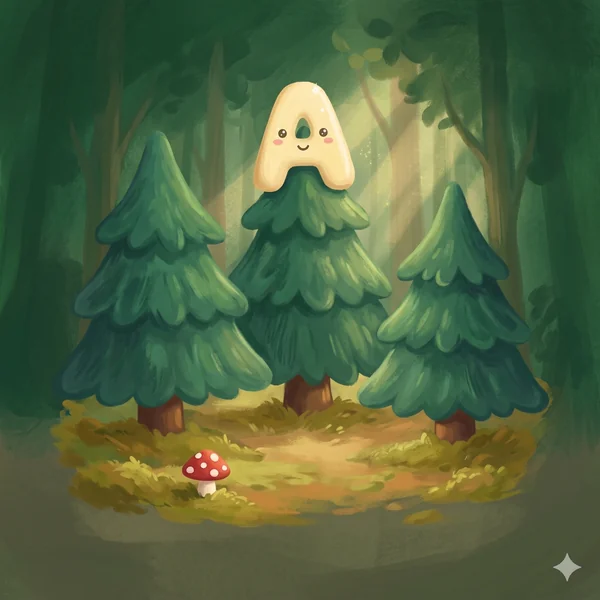
My letters
The Forest
Letters peek out between the pine trees: tap the right one when Tito asks.
An app for kids from age 2. No pressure, no ads, no need to know how to read. Tito tells you everything.



The voice narrates every prompt. Your kid doesn't need to read yet.
Tito guides the whole experience. Shifts mood with whatever happens in the game — always warm, never scolding.






Each world teaches one thing with its own mechanic. No locked levels, no paid unlocks.
Letters peek out between the pine trees: tap the right one when Tito asks.
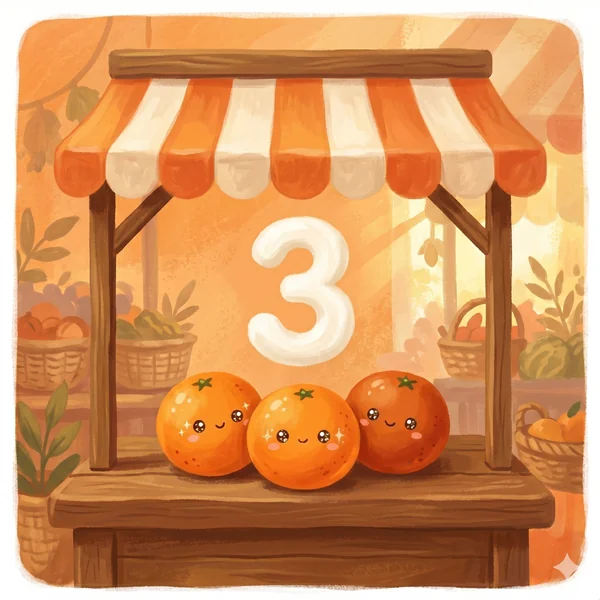
Counting oranges in a market stall with colorful awnings and bunting.
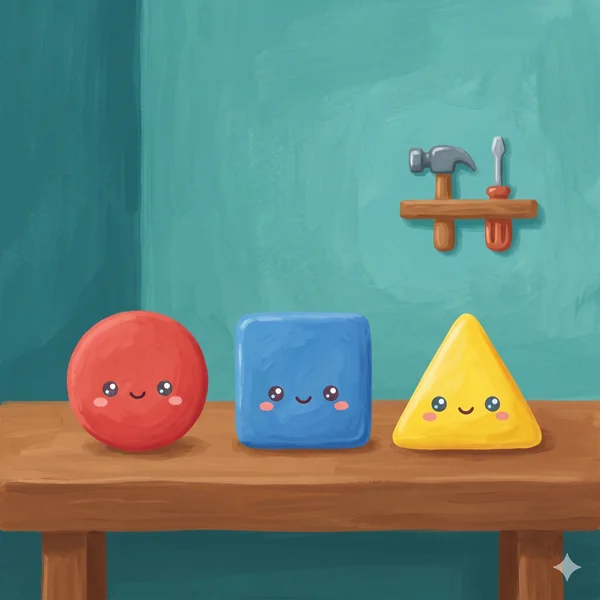
Drag shapes into the right hole — the classic puzzle, with real drag-and-drop.
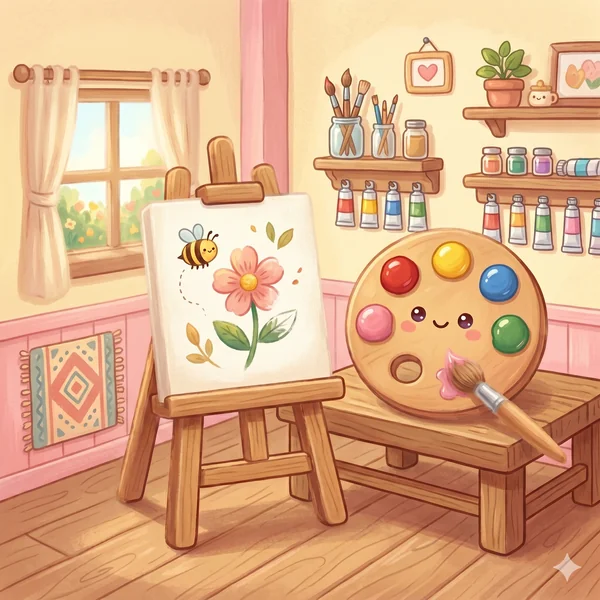
Tito paints with a brush and you pick the splotch of the right color.

Find the animal Tito is looking for among cards with wooden backs.

Trace the path with your finger so Tito can get home.

One little question from each world, no timer, party banners included.
Every right answer unlocks a sticker. The last one always has a holographic halo — like opening a fresh pack.
We know what bothers you about today's "educational" apps. We fixed each one.
Math PIN. To enter Settings you solve a small sum — your kid can't slip in by accident, and you don't have to remember one more code.
No response timer. No error counter visible to the kid. Tito waits as long as needed — if they don't get it, he repeats.
You see minutes played, stickers earned, games completed. Never errors. What your kid hasn't mastered today is not data to display.
Each sibling picks their own Tito and saves progress separately.
The whole app and Tito's voice switch languages with one tap. Uses the system voice — no weird accents, no metallic TTS.
You set the limit. When it ends, Tito falls asleep — no black screen, no alarm. The kid understands it's time to stop.
When you need 20 minutes to take a shower, the real options aren't TikTok or nothing. Tito is what we offer for the moments you can't be there — without pretending it's the best thing for your kid. Here's what the science says and why we built it anyway.
Three independent authorities agree: less screen time is better. We don't hide it — we put it first.
No screens before age 2. Maximum 1 hour between ages 2 and 4 — less is better.↗ View source
Before 18 months, video chat only. Ages 2 to 5, high-quality content co-viewed with an adult.↗ View source
No safe screen time exists for children under 6, except specific supervised activities.↗ View source
Not all apps are equal. The difference between TikTok and Tito is the same as between soda and water. Point by point:
Every decision has a reason in the scientific literature. We show our work.
Autoplay triggers the same dopamine pathway as slot machines. A child under 6 has no prefrontal cortex maturity to resist. Tito finishes the activity and waits.
Uncertainty hooks more than the reward itself. So every Tito game always hands out a sticker — the magic is the sticker, not the surprise.
Lillard & Peterson (2011) showed 9 minutes of fast cartoons reduce executive function. Tito moves slowly on purpose, with warm colors and quiet beats.
WHO suggests 1 hour max. You set the cap. When it ends, Tito falls asleep — no black screen, no alarm, just Tito sleeping. The kid gets it.
Apps with ads blur advertising with game mechanics (advergaming). Young kids can't tell them apart. That's why we chose no ads — not ours, not anyone's.
Madigan et al. (2020, meta-analysis of 18,905 children): educational content with an adult correlates with better language development. Tito invites you to talk, not to stay quiet.
Studies and official guidelines we rely on. All verifiable, all linked.
It's not just "easier" or "harder". The options, button size, and whether streak is visible all change.
Works offline. Bilingual. No ads. Tito is waiting for you.